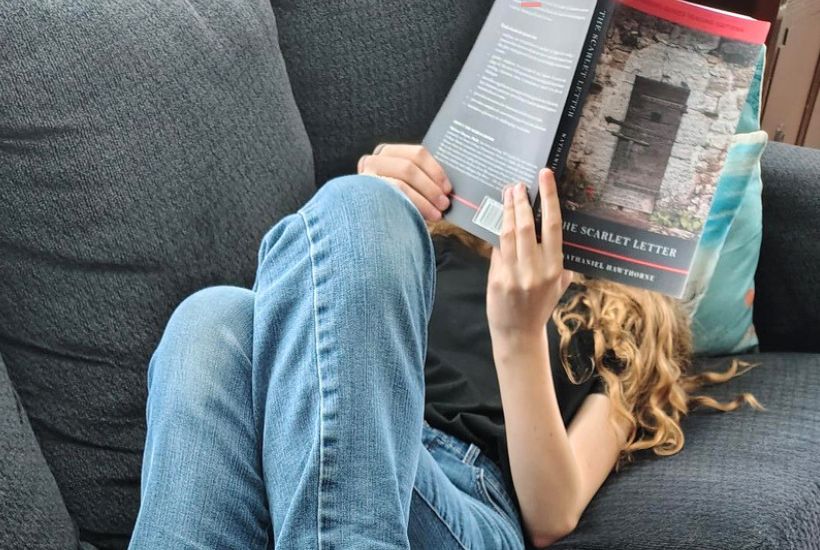
How to Prepare Your Teen for AP English Using the Classics (Without the Struggle)

This post may contain affiliate links. For more information, please read my disclosure policy.
Are you overwhelmed trying to teach your kids classic literature?
Kids skim the classics instead of reading and engaging with the books. And then you have to have a discussion about the book—but what do you discuss? How do you know what’s important and what’s not? And then there’s the writing. Let’s face it, writing about literature is hard!
But what if your kids could learn close reading and critical thinking directly from the text itself?
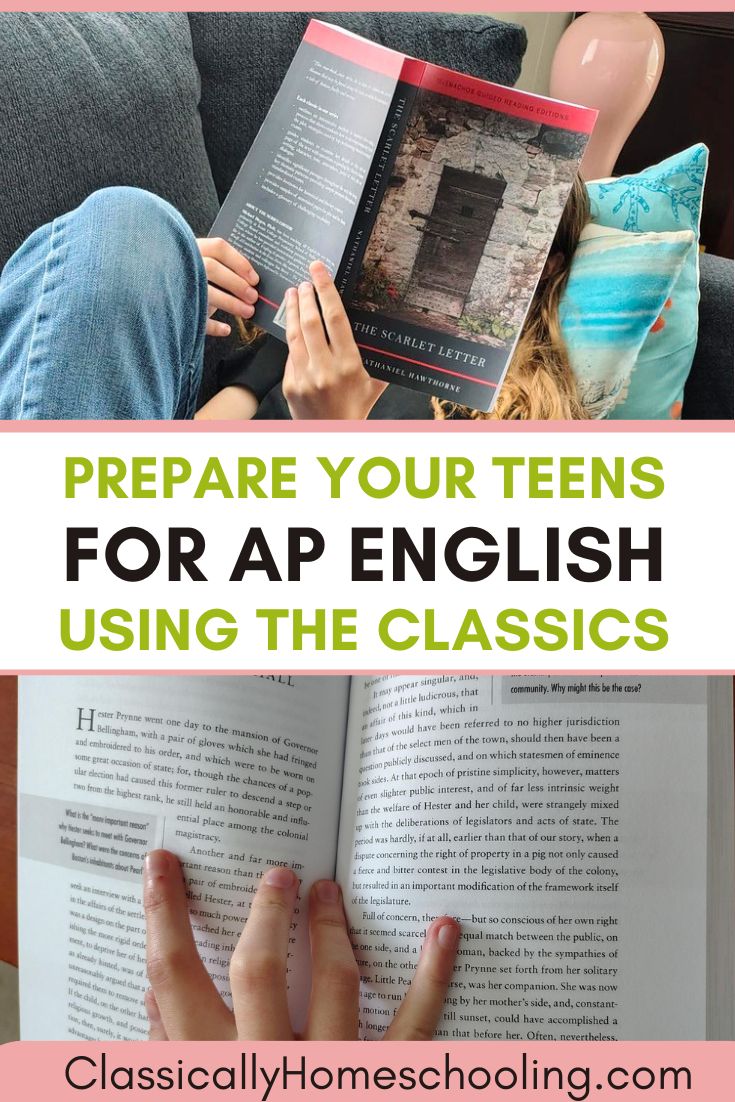
Disclosure: This is a sponsored post. I was compensated for my time reviewing this product and writing this post. All opinions are my own.
Why Classic Literature Matters for AP English Success
As a classical homeschool mom, it’s important to me that my kids read classic literature and not just work through workbooks and other curricula. Classic literature strengthens my kids’ vocabulary and comprehension skills while also building critical thinking. It helps them develop the ability to form an argument and prepares them for the AP English exam.
But most importantly, classic literature opens a door into the world — why people behave the way they do, different worldviews, and commentary about the world we live in.
That requires kids to not just skim the literature I assign. They need to read it carefully.
But learning to read books carefully is a skill that kids are rarely taught. And it’s a skill that’s vital for AP English success.
The Problem with Traditional Editions
Most editions of classic literature are just like regular reading books. You start at the beginning, read each chapter, and finish the book.
There’s no guidance as you read.
Kids aren’t taught how to read a text carefully, so they miss key details. Parents have to create their own instructions. Plus, discussions often happen days or weeks after kids have read the book, making it harder to teach them how to catch important details.
I was so frustrated with how my kids read the classics. So I started looking for a better way to teach close reading and writing — and why I was so excited to discover this approach.
Enter Telemachos Publishing.
A Better Way to Teach AP English: Guided Close Reading Built In
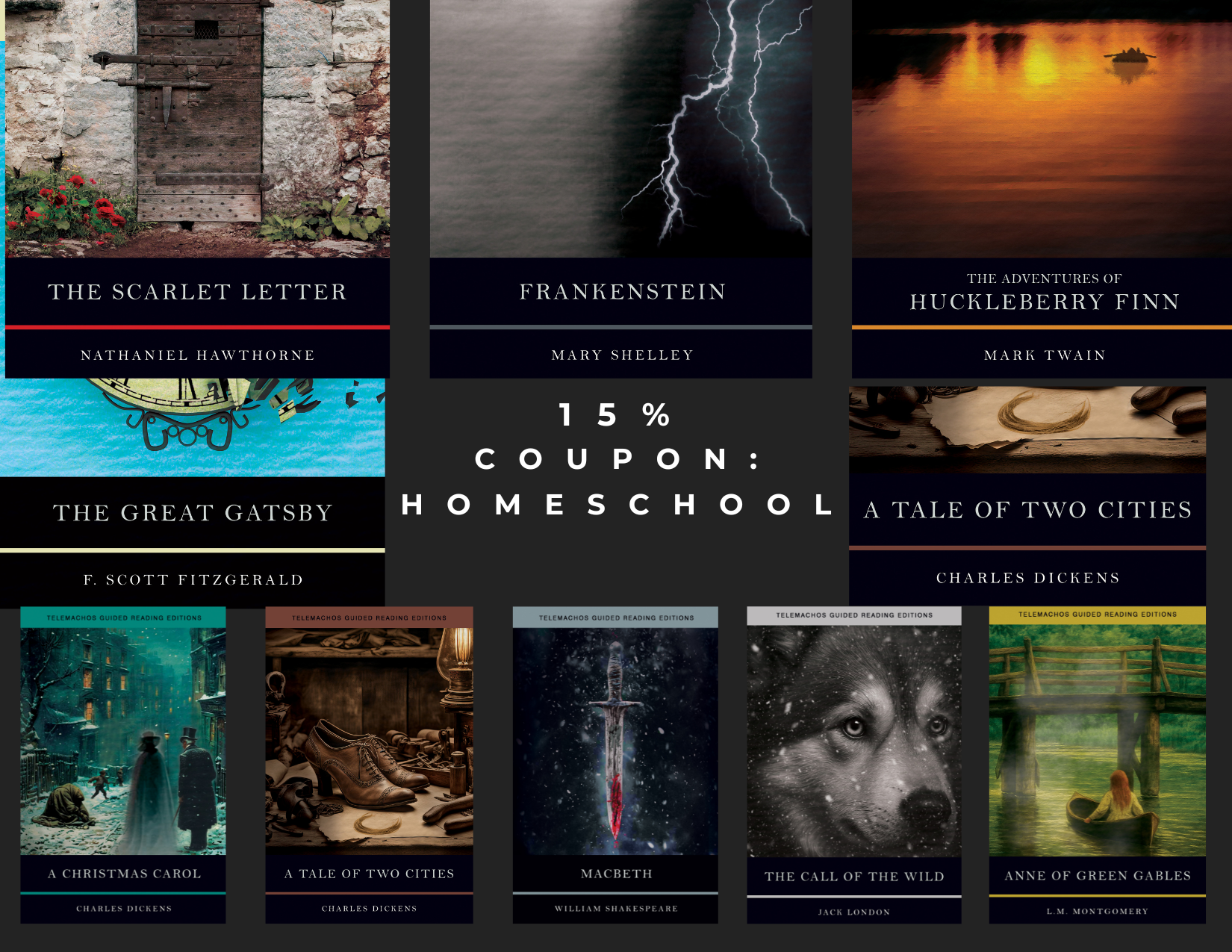
Telemachos Publishing has created guided editions of the classics that build close reading into the book. So far, you can find:
- Call of the Wild
- The Adventures of Huckleberry Finn
- Great Expectations
- The Great Gatsby
- Anne of Green Gables
- Frankenstein
- The Scarlet Letter
- A Tale of Two Cities
- Macbeth
- A Christmas Carol
How These Classics Teach Critical Reading and Writing Strategies
These editions are an amazing way to read the classics. They include guided reading questions directly on the page. This means kids aren’t just reading or skimming—they have a question to answer as they move through the text.
And the prompts help kids learn how to close read. They show students what to notice, what questions to ask, and how to think deeply—the exact reading strategies kids need as they develop critical reading skills.
If you’re ready to help your teen succeed in AP English, you can browse the full collection of guided classics and choose the best starting point for your student.
Inside the Telemachos Editions
Let’s take a closer look at how these editions work.
1. Guided Reading Questions (Close Reading)
As I mentioned earlier, the guided reading questions are built into the text itself. As kids begin reading a chapter, the questions are right there on the page, making it simple to follow.
I’ve used guided reading before, but students were always juggling a worksheet and the novel—which made it harder. Often, they’d just give up and read straight through.
These questions are written by a master teacher who has taught AP English for years. They’re designed to help students notice key literary elements like plot, character development, and setting—at a much deeper level than elementary school.
My daughter said,”This is amazing!” When she saw the guided reading questions throughout the book. I was thrilled as well. The questions make it so much easier for kids to close read!

2. Writing Instruction That Actually Connects
Writing instruction is also built into these editions. Students learn how to write an essay and develop key writing strategies, including how to form an expository argument and develop an interpretive voice.
The instruction is based on real AP grading experience. So if your goal is for your child to take and pass the AP exam, these editions are incredibly helpful.
What I especially appreciate is how these books model instructional strategies like clear paragraphing and step-by-step argument development, so my kids can actually see what strong writing looks like.
3. AP-Level Thinking Made Accessible
These editions make AP-level thinking accessible to teenagers. They were developed by a high school English teacher with over 30 years of experience, who has also graded the AP English exam and served as a College Board consultant.
If your child is planning to take the AP exam, these books are invaluable. The writing strategies have been tested with proven results: a 100% pass rate, with over 80% of students scoring 4s and 5s.
4. Built-In Support Tools
These books also include helpful support tools, such as an extensive glossary and footnotes that explain historical and literary references.
This is especially helpful because students often lack the background knowledge needed to fully understand classical literature.
In addition, there is an annotated page example students can model, along with student model essays.
Why This Works (Even Without a Teacher)
These books work so well because they model the thinking process of skilled readers. Even if you’re not an expert teacher, your child is still learning how to analyze literature effectively.
They are especially helpful for independent learners, giving homeschooled teenagers the tools they need to succeed.
Who This Is Best For
If you’re a parent who wants structured reading strategies, or you have a high school student preparing for the AP English exam—or a student who struggles with analysis, writing, or staying engaged with classics—these books are an excellent fit.
They will guide both you and your student in learning how to closely read classic literature and get more out of your studies.
Featured Titles
The Scarlet Letter
This story really gets students thinking about guilt, choices, and how society shapes our decisions. It’s a great starting point for deeper conversations and learning how to read carefully.
Frankenstein
This isn’t just a monster story—it opens the door to big questions about responsibility, ambition, and what it means to be human. There’s a lot here for students to think through and write about.
Adventures of Huckleberry Finn
Huck’s journey brings up questions about right and wrong, friendship, and going against what society expects. It naturally leads to great discussions and helps students learn how to form their own opinions.

How to Use These in Your Homeschool
These guided editions are easy to use in your homeschool. The questions are built into the reading, so have your child take notes as they read and discuss answers each week. Then move into the writing instruction and have your student write an essay based on the text.
Over time, your teenager will build independence and confidence.
Prepare Your Teen for AP English Using the Classics
Preparing your teen for AP English doesn’t have to feel overwhelming. With guided editions like those from Telemachos Publishing, students can build strong reading, writing, and critical thinking skills step by step—simply through the way they read classic literature.
Final Thoughts
These editions don’t just teach literature. Instead, they teach your teenager how to think, how to build an argument, and how to succeed in both AP English and future college classes.
If you’re ready to help your teen move beyond surface reading and truly master AP English skills like close reading, critical thinking, and written argument, I highly recommend taking a look at these guided editions.
You can explore Telemachos Publishing’s Guided Editions of the Classics and see which titles fit your homeschool best. (Volume discounts are available as well if you’re teaching in a co-op or classroom.)
And don’t forget—you can save 15% on your order with the code HOMESCHOOL when you explore Telemachos Publishing’s guided editions.